
Pakistan’s Competition Commission called on to end manufacture & trade of mercury added skin whiteners
Over 20 groups, including State of California and NYC, urge an end to toxic production at the source
San Francisco, California. – Following up on the release last fall of a Zero Mercury Working Group report and a “Consumer Alert” issued in February by the State of California, over twenty groups are urging the Competition Commission of Pakistan (CCP) to end the manufacture and trade of mercury added skin whiteners (Hg/SW).
Michael Bender, ZMWG co-coordinator and one of the lead authors of the report said: “We applaud the Competition Commission of Pakistan for recently initiating a nationwide investigation into companies involved in the production, marketing, and sale of skin whitening creams containing high levels of mercury. This will both protect consumers from serious health risks and ensure fair competition within the cosmetics market.
Mercury in skin whitening creams are known to many local, state, federal, and international agencies as toxic and a risk to human health. Regular application of creams containing mercury can lead to rashes, skin discoloration, and blotching, while long-term exposure to high levels of mercury in cosmetic products can cause serious health consequences, including damage to the skin, eyes, lungs, kidneys, digestive, immune, and nervous systems.
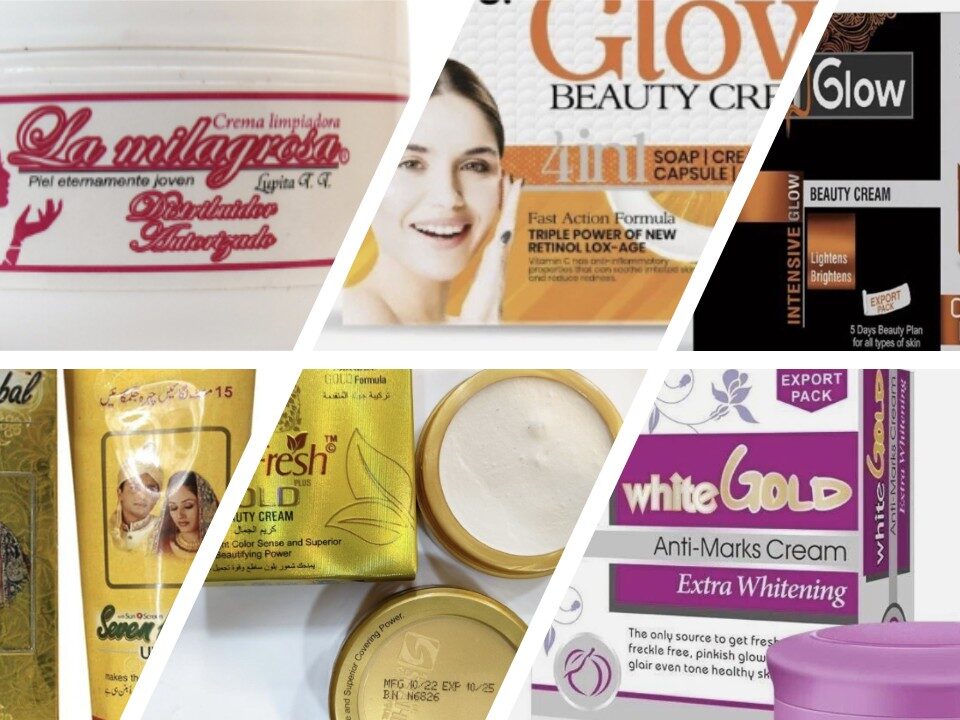
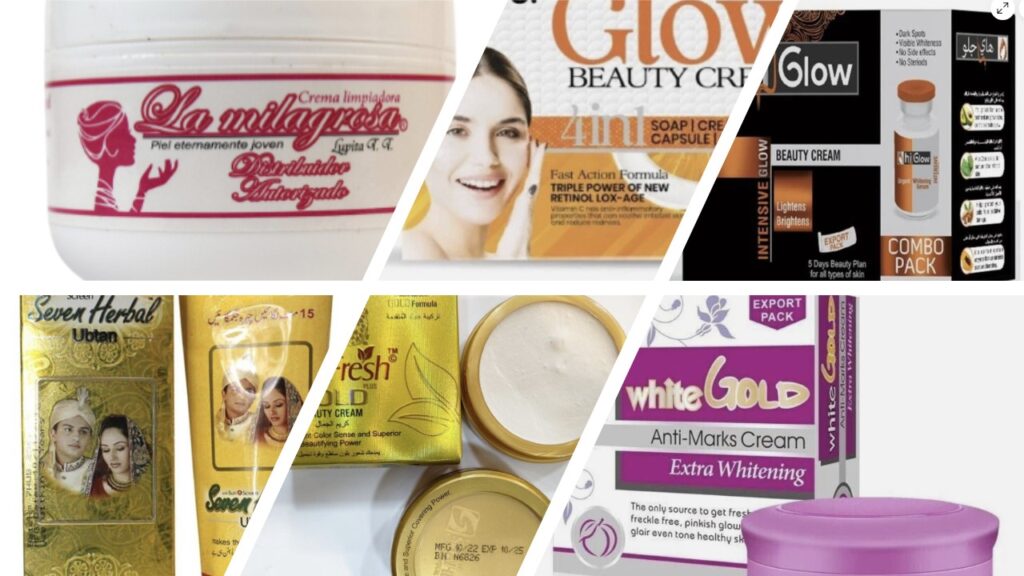
Last year, the Zero Mercury Working Group (ZMWG) and its partners from Pakistan, Kenya, the Philippines, and the United States purchased and tested samples from six widely available brands of skin whitening creams made in Pakistan, as per their packaging: Faiza, Golden Pearl, Goree, Aneeza, Parley, and Face Fresh. The results were alarming: 35 of the 37 creams contained mercury levels up to thousands of times higher than the previous legal limit of 1 part per million set by the Minamata Convention on Mercury,[1] with one product reaching 24,000 ppm. Products were tested in accredited laboratories in the EU and the US.[2]
Most recently in the United States, the State of California Department of Public Health issued a Consumer Alert, “Mercury Found in These Face Creams – Stop Using Immediately” (see below) on February 17, 2026. One of the products tested by the State of California, “New Face” cream[3]–which appears to have been produced in Pakistan– had a dangerously high mercury level of 210,000 part per million.
Last year, the New York City Department of Health shared similar high mercury data on skin whiteners with the Government of Pakistan and received the following response:
- Information referred to the Ministry of National Health Services Regulations and Coordination and the Ministry of Science and Technology for investigation and necessary action to ensure conformity of the traditional cosmetic products from Pakistan with international safety and quality standards and to submit a report in the matter to the Ministry of Commerce.
- The Trade Development Authority of Pakistan (TDAP) has also been requested to engage relevant trade and industry stakeholders including exporters and manufacturers of these products to sensitize them on the issue
Most all of the products purchased had already been identified by governments as exceeding the legal limit and relevant warnings have been issued. Nevertheless, the trade of these products continues unimpeded. ZMWG estimates that more than 66 million mercury-added skin whiteners are produced annually, using over 110 metric tons of mercury compounds, with Pakistan, Thailand, and China together accounting for over half of global production.
Dr. Razia Safdar, from Sustainable Development Policy Institute said: “Let’s dive deeper into trade and manufacturing of mercury added skin whitening products. As a Party to the Minamata Convention, Pakistan needs to prohibit the manufacture, import and trade of skin whitening products having more than 1ppm mercury.”
This report comes at a critical moment. Following the 2025 COP decision affirming that eliminating mercury-added skin-lightening products is a multifaceted challenge that includes addressing regulations, supply chain management, capacity‑building and awareness-raising.
Elena Lymberidi-Settimo, Senior Advisor on Mercury at the EEB and international co-coordinator of the ZMWG said: “Manufacturing countries must take immediate action, adopt, implement and enforce the mercury ban on cosmetics. Eliminating the manufacture, and hence the supply of Hg/SWCs at the source should be a priority, given the direct health effects these entail as well as the difficulties encountered when tackling their distribution or sales.”
Jam Lorenzo, Deputy Executive Director of Ban Toxics, Philippines: “The ZMWG report presents a somber truth — national bans on mercury-containing SLPs are not enough to curtail the sale of harmful SLPs. The smuggling of these products has historically been hard to regulate in countries like the Philippines due to limited enforcement capacity, and the advent of online selling platforms has only served to exacerbate the problem. Unless we address the root causes of the issue by implementing global restrictions on production, it will be difficult to protect human health and the environment from the adverse impacts of mercury-containing cosmetic products.”
Griffins Ochieng Executive Director, CEJAD, Kenya, said: “These toxic creams are illegally sold via online platforms and pose a health risk to unsuspecting consumers across the global south such as Kenya.”
Finally, to mark this year’s International Woman’s Day on March 8th, we strongly urge the CCP to address deceptive marketing of mercury added skin lightening products by adhering to the Competition Act of 2010.[4]
This includes follow through with legal actions to put an end to Pakistani manufacturing and marketing of these dangerous and illegal cosmetics both to consumers domestically and around the world. As a party to the Minamata Convention on Mercury, Pakistan is obligated to adhere to the Convention’s ban on the production and trade in mercury added skin whitening products.
ZMWG is an international coalition of more than 110 public interest environmental and health non-governmental organizations from over 55 countries from around the world formed in 2005 and co-coordinated by the European Environmental Bureau and the Mercury Policy Project.
Picture credits: meermediaproductions, Instagram https://www.instagram.com/p/DP39eT2DTRU/
//ENDS
Contacts:
Michael Bender, Mercury Policy Project, mercurypolicy@aol.com , T: +1 8022239000
Elena Lymberidi-Settimo, elena.lymberidi@eeb.org ; T +32496532818
—– Forwarded Message —–
From: EHIB Communications <hhc@cdph.ca.gov>
To: “mercurypolicy@aol.com” <mercurypolicy@aol.com>
Sent: Tuesday, February 17, 2026 at 03:31:05 PM EST
Subject: Mercury Found in These Face Creams – Stop Using Immediately

For more information:
- ZMWG letter to Competition Commission Pakistan, 10 March 2026: https://www.zeromercury.org/wp-content/uploads/2026/03/Sign-on-letter-CCP-March-2026.pdf
- The full report: https://www.zeromercury.org/wp-content/uploads/2025/10/ZMWG-Zero-Out-Toxic-Production-Oct-2025-Full-Report.pdf
- Executive summaries of the report are available in French, Spanish and English
- ZMWG views in English, French and Spanish
- SDPI project: https://sdpi.org/assisting-in-the-implementation-and-enforcement-of-the-minamata-convention-on-mercury-in-pakistan/project_detail
- https://profit.pakistantoday.com.pk/2025/10/15/ccp-launches-nationwide-probe-into-mercury-laden-skin-whitening-creams/
- Amazon double standard report: https://www.zeromercury.org/poisoning-for-profit-amazons-double-standard/
- The ZMWG campaign on skin lightening creams: https://www.zeromercury.org/mercury-added-skin-lightening-creams-campaign/
- The full database of mercury-added cosmetics: https://www.zeromercury.org/cream-catalog/
Notes to the editors
- Mercury is a neurotoxin, meaning that it damages the nervous system. Long-term use of mercury-added SLPs may damage the eyes, lungs, kidneys, digestive and immune systems.
- For more information on health risks from mercury SLPs, see the World Health Organization fact sheet: https://apps.who.int/iris/bitstream/handle/10665/330015/WHO-CED-PHE-EPE-19.13-eng.pdf
- Testing was coordinated by ZMWG partners: SDPI (Pakistan), Ban Toxics (Philippines), CEJAD (Kenya), Mercury Policy Project (USA), and We Act (USA).
- The SWCs were purchased from local retail shops and from the official manufacturers’ websites in Pakistan, and from online platforms distributing these products worldwide: Daraz for Pakistan; Jiji, Jumia and Kilimall for Kenya; Shopee and Lazada for the Philippines; and two online platforms in the U.S. – Aleena Cosmetics and Axabee Skincare.
- Skin-lighteners are sold as creams, lotions and soaps. ZMWG testing indicates that hundreds if not thousands of them are available in the global market, see: www.zeromercury.org/mercury-added-skin-lightening-creams-campaign. Those that use mercury as an active ingredient often contain from 2 to 10 percent mercury by weight.
[1]https://minamataconvention.org/sites/default/files/documents/information_document/Minamata-Convention-booklet-Oct2024-EN.pdf
[2] https://www.zeromercury.org/wp-content/uploads/2025/10/ZMWG-Zero-Out-Toxic-Production-Oct-2025-Full-Report.pdf
[3] https://newfacepk.com/policies/contact-information
[4] https://cc.gov.pk/assets/images/Downloads/competitionn_act_2010.pdf