**** LATEST NEWS! ****


 ZMWG Views on Mercury Use in Dental Amalgam


June 2012

The Zero Mercury Working Group (ZMWG) believes that the mercury treaty should contain effective “phase down” reduction measures to decrease dental amalgam use, leading to a global amalgam phase-out (for most applications) by a fixed date. 

Country experiences clearly demonstrate that phasing out amalgam over time – while still providing quality dental care – is achievable. The Nordic countries, Finland and Japan have all phased out most amalgam uses.  Amalgam is only used in about 8% of restorations in Russia;[i] 10% in the Netherlands, Switzerland and Mongolia; 20% in Singapore and Vietnam;[ii] and 26% in India.[iii] The following countries have legislation, restrictions or guidance on amalgam in place: Spain, Italy, Austria, Germany, United States, Canada, Australia, Singapore, Kuwait, Mexico, Bulgaria, Malaysia, China, Vietnam, Indonesia, Myanmar, Thailand and the Philippines.[iv]

Some countries may face challenges in fostering the transition to mercury-free dental restorations.  For countries with limited resources, assistance and extra time should be provided to train dentists, nurses and dental care providers, inform consumers and promote mercury-free alternatives. Therefore, the treaty should include a multi-pronged approach with short, medium and long term strategies to reduce amalgam use, including those discussed below.

Dental Mercury Release Pathways

Dental amalgam represents about 10% of global mercury consumption.[v]  Dental amalgam is often the largest source of mercury in municipal wastewater; in the soil via wastewater sludge, land disposal and the burial of the deceased with fillings; as well as an increasing source of mercury air pollution from wastewater sludge incineration and crematoria, due both to the rise in cremation and the increasing percentage of amalgam retained in the teeth of the deceased.[vi]  A significant amount of mercury is released into the environment through various pathways, including as an indirect result of the diversion of traded dental mercury for other purposes.[vii]  

Major pathways of mercury due to use of dental amalgam every year[viii]


Major release/pathways

Mercury (metric tonnes/year)

Atmosphere

50-70

Surface water

35-45

Groundwater

20-25

Soil

75-100

Recycling of dental amalgam

40-50

Sequestered, secure disposal

40-50

Total

260-340

Source:  UNEP


However, these estimates are determined to be “soft,” because amalgam shipments are not coded as elemental mercury (resulting in no UN “Comtrade” data on dental mercury) and few countries track dental mercury use.[ix]  Therefore, obtaining better baseline data is imperative.


Transition to Available and Cost Effective Mercury-Free Alternatives  

Material alternatives to dental amalgam are readily available and a global phase-down of amalgam “…will contribute considerably to reduction of mercury use and release,” states a 2010 World Health Organization (W.H.O.) report,[x] one of many advocating for reduction.  Previously, an EU scientific committee had concluded “that dental health can be adequately ensured by both types of materials” (i.e. mercury-free alternatives and amalgam), noting that alternatives have been used for over 30 years, and revealed little evidence of clinically significant adverse effects.”[xi] “Substituting alternative materials for mercury-based dental fillings also has less negative impact on human health and the environment,” according to a new report released by Health Care Without Harm, although the report emphasizes that particular care should be paid to such transitions in economically impoverished areas.[xii] 

The W.H.O. has been promoting the use of mercury-free alternatives in impoverished areas for quite some time.  As an earlier W.H.O. report explains, "the majority of the world's population still suffers from untreated dental decay” because “of the continued dependency on traditional approaches to oral health care.”   W.H.O. believes that Atraumatic Restorative Treatment (ART) provides communities with safe and effective dental care without amalgam or expensive dental equipment.  ART inexpensively removes dental decay with hand instruments and the cavity is filled with a tooth-colored adhesive material.  According to WHO, “ART is one of the most suitable caries controlling approaches for use in primary oral health care programmes and therefore the continuation of the global promotion of ART is one of its major objectives."[xiii]

In its 2010 report, the W.H.O. indicates that it “will facilitate the work for a switch in use of dental materials” because, as the report stated, “for many reasons restorative material alternatives to dental amalgam are desirable.”[xiv]   Among others, mercury-free filling alternatives foster use of minimally interventional adhesive techniques, helping to preserve the tooth.[xv] 

In addition, the W.H.O. report recommends that the transition away from dental amalgam should involve careful planning.  “Dental professionals will need to be made aware of the environmental impact of dental materials. Similarly, educating other stakeholders, governments, insurance companies and manufacturers is needed.”[xvi]    The new Health Care Without Harm study concurs.  “Such a phase-out should take into account the practical availability of alternative materials, the equipment needed to utilize non-mercury alternatives, the training of dentists to utilize these alternatives, and the costs to the patient and society.”[xvii] 

Consumer education and patient outreach is also essential.  When patients learn that amalgam is mainly mercury, they overwhelmingly prefer the alternatives.[xviii]  Disseminating public information provides patients with the information needed to make informed decisions.

Based on current mercury reduction trends, amalgam use is expected to continue declining and the use of mercury-free alternatives to increase.  Amalgam costs will likely increase because of tighter mercury regulations and the rising price of silver and mercury.[xix] 

Amalgam is already a higher-priced dental material when “external” environmental and societal costs are factored in.  The adverse effects on the environment and society over the entire life cycle of dental amalgam – including mercury production, preparation of filling materials, removal of old fillings and replacement with new ones, the environmental and health impacts from mercury recycling, discharges to wastewater, solid waste disposal, emissions from crematoria and releases from cemeteries – can only be sustainably avoided by phasing out amalgam.[xx]


Equitable Coverage for Mercury-Free Dental Fillings

In many countries, financial coverage for dental care is not distributed fairly, while in others, steps have been taken to make it more equitable. For example, to make amalgam more cost-neutral against other filling materials, the Swedish Parliament decided in 1999 that no financial support should be given for amalgam fillings via the national dental insurance.[xxi]  In another example, the Mexico City Health Secretariat promotes the use of mercury-free alternatives by de-authorizing the purchase of amalgam for its 31 public hospitals and 230 clinics.[xxii] 

As explained in the 2010 W.H.O. report, “Existing or planned third-party payment systems must consider reimbursement schemes incorporating dental care which make use of material alternatives to dental amalgam.”[xxiii]  The dental industry also has a responsibility to adapt to higher use of material alternatives to amalgam.  This should include collaborating with authorities and health professionals on reducing the price of alternatives and ensuring supply and distribution of materials for restorative dental care in all countries, says W.H.O.”[xxiv]


Discouraging Amalgam Use in Sensitive Populations

The treaty text should also include provisions encouraging countries to protect vulnerable populations, such as women of childbearing age, lactating mothers and children.  In many nations, placing small composites or glass ionomers is already less expensive than small amalgams and “...alternative restorative materials of sufficient quality are available for use in the deciduous [baby] dentition of children” according to W.H.O.[xxv]  Many countries discourage amalgam use in sensitive populations. These include placing restrictions on amalgam use in vulnerable populations and directives on the use of dental restorative materials. [xxvi]

In Summary

Clearly, both the scientific literature and the experience in some countries indicate that dental amalgam use can be both phased down and ultimately phased out (for most applications).  The treaty should include both elements so that the mercury releases associated with this product use can be virtually eliminated over time.

For more information please contact:


Michael Bender, ZMWG /Mercury Policy Project, This e-mail address is being protected from spambots. You need JavaScript enabled to view it

Elena Lymberidi-Settimo, ZMWG/European Environmental Bureau, This e-mail address is being protected from spambots. You need JavaScript enabled to view it

Zero Mercury Working Group Website:  http://www.zeromercury.org


[i]Danish EPA, Assessment of Mercury Releases from the Russian Federation,  Copenhagen., 2005, p.80. http://www.zeromercury.org/library/Reports%20General/0502%20Dk%20report%20on%20Hg%20releases%20in%20Russia.pdf

[ii] World Health Organization. Future Use of Materials for Dental Restoration, 2010. http://www.who.int/oral_health/publications/dental_material_2011.pdf

[iii] Toxics Link, Mercury in Our Mouths, An Estimation of Mercury Usage and Release from the Dental Sector in India, 2012, http://www.toxicslink.org/?q=publications/reports/report-mercury-our-mouth

[iv] World Health Organization. Future Use of Materials for Dental Restoration, 2010.

[v] UNEP/AMAP, Technical Background Report to the Global Atmospheric Mercury Assessment, 2008.

http://www.chem.unep.ch/mercury/Atmospheric_Emissions/Technical_background_report.pdf

[vi]The Cremation Society of Great Britain statistics on cremations amount to nearly one-third of all EU deaths and emit about 4.5 tonnes of mercury to air in 2005, will increase by two-thirds between 2000 and 2020, accounting for between 11% and 35% of all UK mercury air emissions in 2020.  http://www.srgw.demon.co.uk/CremSoc4/Stats/

[vii] Viega, M., Maxson P., Hylander.  Origin and consumption of mercury in small-scale gold mining; Journal of Cleaner Production 14 (2006) 436e447.

[viii] World Health Organization. Future Use of Materials for Dental Restoration, 2010.

[ix] Bender, M., Meeting presentation, Future Use of Materials for Dental Restoration, Geneva, Switzerland, 2009. http://mercurypolicy.org/wp-content/uploads/2009/11/ZMWGPresentationtoWHODentalMeeting2009.pdf

[x] World Health Organization. Future Use of Materials for Dental Restoration, 2010

[xi] Scientific Committee on Emerging and Newly Identified Health Risks, Health and Consumer Directorate, The safety of dental amalgam and alternative dental restoration materials for patients and users,  May, 2008.

http://ec.europa.eu/health/ph_risk/committees/04_scenihr/docs/scenihr_o_016.pdf

[xii] ”Health Care Without Harm Research Collaborative , Authors: Serap Erdal, Ph.D. in collab. with Peter Orris, M.D., M.P.H., Mercury in Dental Amalgam and Resin-Based Alternatives: A Comparative Health Risk Evaluation, June 13, 2012.   http://www.noharm.org/global/news_hcwh/2012/jun/hcwh2012-06-13.php

[xiii] Division of Non-Communicable Diseases, Oral Health Programme, World Health Organization, Atraumatic Restorative Treatment For Tooth Decay, A Global Initiative, 1998-2000, 1998.

[xiv] World Health Organization. Future Use of Materials for Dental Restoration, 2010.

[xv] Ibid.

[xvi] Ibid.

[xvii] ”Health Care Without Harm Research Collaborative , Authors: Serap Erdal, Ph.D. in collab. with Peter Orris, M.D., M.P.H., Mercury in Dental Amalgam and Resin-Based Alternatives: A Comparative Health Risk Evaluation, June 13, 2012.   http://www.noharm.org/global/news_hcwh/2012/jun/hcwh2012-06-13.php

[xviii] Mercury Policy Project, Appendix A, What Patients Don’t Know:  Dentists Sweet Tooth for Mercury, February 2006.  http://mpp.cclearn.org/wp-content/uploads/2008/08/whatpatientsdontknow1.pdf

[xix] Simpson, Cam and Walsh, Heather, Bloomberg News, Gold Boom Spreads Mercury as 15M Miners Exposed,  “The wholesale price for the industry-standard steel container holding 76.5 pounds of mercury was $1,250 a year ago; the same “flask” costs $2,100 today,” May 24, 2012.

http://www.businessweek.com/news/2012-05-24/gold-boom-spreading-mercury-as-15-million-miners-exposed#p2

[xx] Concorde East/West, The Real Cost of Dental Amalgam, April 2012. http://tinyurl.com/Concorde-Report

[xxi]  KEMI, Mercury-free Dental Fillings:  Phase out of amalgam in Sweden, PM 9/05; 2005. http://www.who.int/ifcs/documents/forums/forum5/pm9_05.pdf

[xxii] Health Care Without Harm, Activities Update for INC2,2011. http://www.mercuryfreehealthcare.org/INC2_Brochure_FINAL_WEB.pdf

[xxiii]World Health Organization. Future Use of Materials for Dental Restoration, 2010.

[xxiv] Ibid.

[xxv] Ibid.,

[xxvi] Health Canada, The Safety of Dental Amalgam. http://www.hc-sc.gc.ca/dhp-mps/md-im/applic-demande/pubs/dent_amalgam-eng.php; National Health & Medical Research Council, Dental Amalgam – Filling You In (2002.) http://www.nhmrc.gov.au/_files_nhmrc/file/publications/synopses/d18.pdf;  Ministry of Health. http://www.bioral.it/html/html/decreto.html; http://worldental.org/dental-news/european-dentists-ban-mercury-amalgamfillings/3276/;athttp://bmg.gv.at/cms/home/attachments/2/5/0/CH1095/CMS1207724860370/empfehlungen_zu_dentalamalgam.pdf; United States Public Health Service, Dental Amalgam and Alternate Restorative Materials: National and International Activities. http://www.health.gov/environment/amalgam2/National.html

Home Press Releases Mercury treaty rises but weak emissions regime undercuts progress
Mercury treaty rises but weak emissions regime undercuts progress PDF Print
Saturday, 19 January 2013 07:28
logo EEB_colouredzeromercury logo

Mercury treaty rises but weak emissions regime undercuts progress

[19 January 2013, Geneva]—After four years of deliberation, a new global regime rises today that will govern toxic mercury worldwide.  The new treaty is a mixture of mandatory and voluntary elements intended to control the burgeoning global mercury crisis.  While heading in the right direction, the Zero Mercury Working Group[i], expressed concerns about the treaty not reaching far enough nor fast enough to address the spiraling human health risks from mercury exposure.


“Adoption of a global legal agreement on mercury is a major accomplishment,” said Michael T. Bender, co-coordinator of the Zero Mercury Working Group.   “Yet the instrument is hampered by weak controls on mercury emissions from major sources like coal-fired power plants.”


For instance,  new facilities will not be required to have mercury pollution controls for 5 years after the treaty enters into force, with existing facilities given 10 years before they begin their control efforts. 


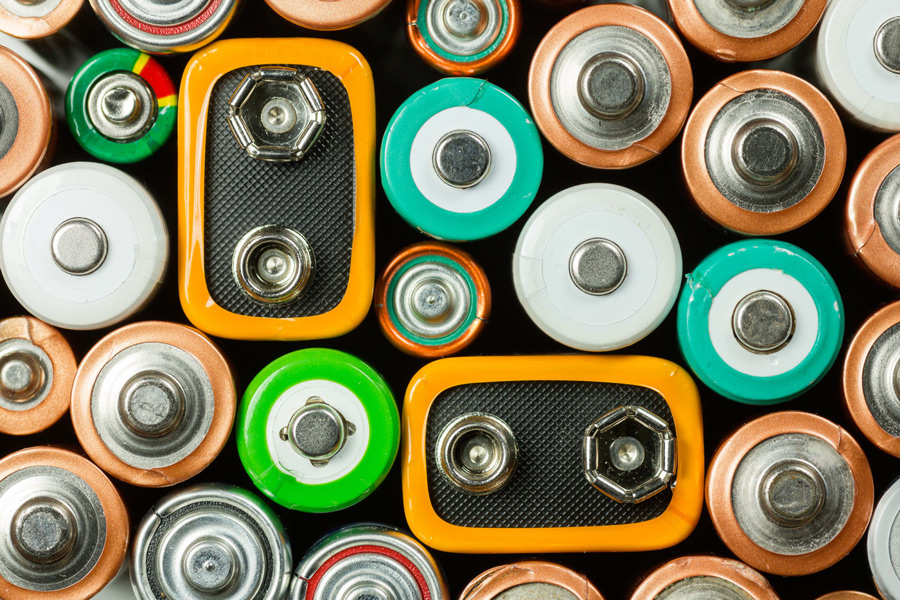
Yet ZMWG says there are bright spots in the treaty. These include provisions to reduce trade, prohibit the primary mining of mercury, and phase out the toxic element in most products containing mercury, like thermometers, measuring devices and batteries. 


“Some of these steps were unthinkable just a couple of years ago.  Now, alternatives exist for most all products containing mercury,” said Elena Lymberidi-Settimo, of European  Environmental Bureau and co-coordinator of ZMWG. “The treaty sends the right market signal and will eventually lead to less exposures worldwide."


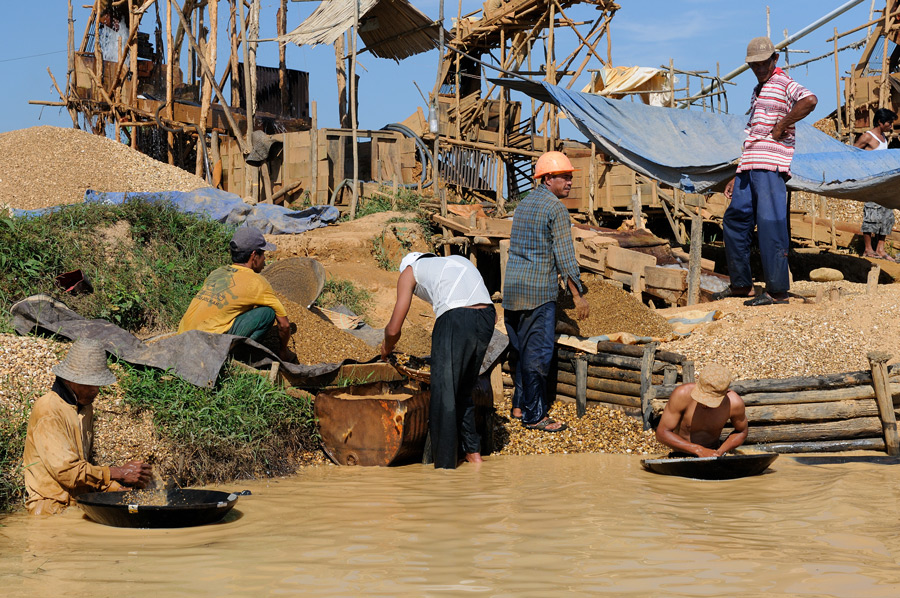
The treaty also addresses artisanal and small-scale gold mining (ASGM),  which is both the largest intentional use of mercury globally, and is the largest emission source.


“While national action plans will foster reduced use of mercury in ASGM, the treaty fails to include a provision to require an eventual end to this polluting practice,” said Richard Gutierrez, Ban Toxics! Director from the Philippines.  “With the current text, it seems that mercury use in ASGM may go on indefinitely.”


The Zero Mercury Working Group looks forward to treaty implementation, as the real challenge begins for the governments especially in developing and least developing states.  The new mercury treaty, in spite its flaws, presents a real opportunity to work towards significant reduction of mercury globally.


Michael Bender, tel.: +802  917 4579; email:  This e-mail address is being protected from spambots. You need JavaScript enabled to view it "> This e-mail address is being protected from spambots. You need JavaScript enabled to view it


Elena Lymberidi-Settimo, tel.:+32 2 2891301, +32 496 532818, This e-mail address is being protected from spambots. You need JavaScript enabled to view it "> This e-mail address is being protected from spambots. You need JavaScript enabled to view it


###


[i] The Zero Mercury Working Group is an international coalition of over 100 public interest NGOs from more than 50 countries founded by the European Environmental Bureau and Mercury Policy Project, in 2005 to achieve ‘Zero’ emissions, demand and supply of mercury; www.zeromercury.org